


Playroom Organization in Houston: Systems Your Kids Can Actually Run
Home Organization · Houston TX
Eight kids were in that playroom over one weekend. It was back to normal in about thirty minutes, and no adult did it.
I’m Jordan Wilde, a professional organizer in Houston. I build whole-family systems, which means the goal of a playroom project is never a room that looks good in a photo. The goal is a room a six-year-old can put back without asking anyone where anything goes.
Most of the playrooms I walk into have already been organized once. There are bins. There are labels. Somebody spent a Saturday on it in February and by March it looked exactly like it did before. That is the pattern I want to talk about, because it is not a discipline problem and it is not a storage problem. Playroom organization in Houston homes fails for a reason that has nothing to do with how much your family cares.
Why playrooms fall apart in a week
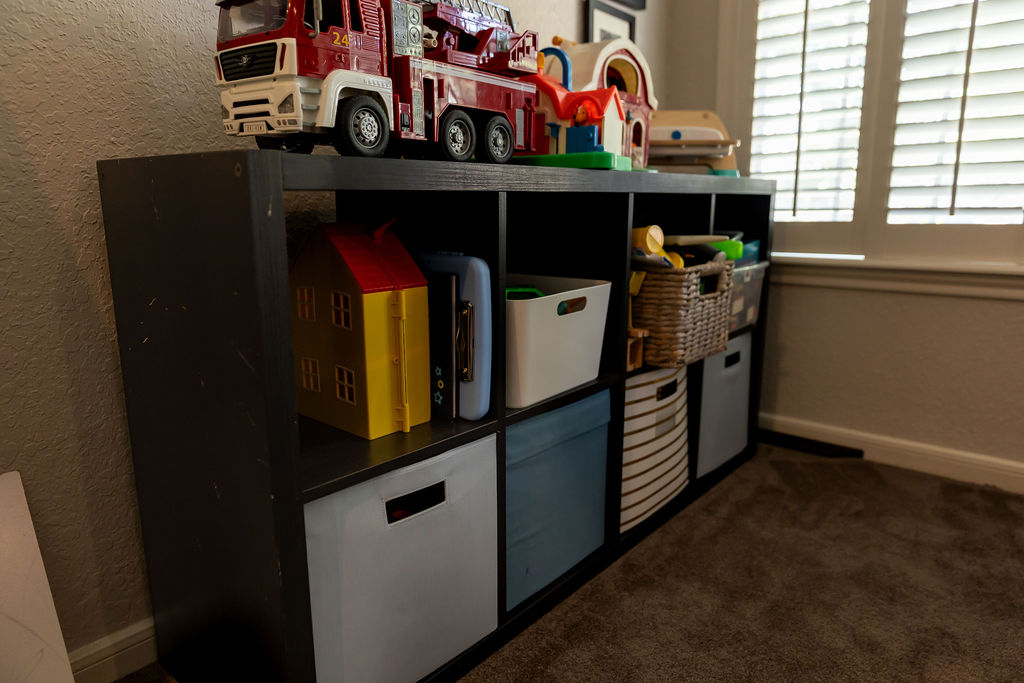
Because the system was built by an adult, at adult height, using adult categories.
Think about what that actually means in practice. The bin is on the third shelf, which a four-year-old cannot reach. The label says “Building Toys,” which a four-year-old cannot read. And the category itself is an adult idea. Your kid does not think “building toys.” Your kid thinks “the magnet ones” and “the wood blocks” and those are two different things that should never share a bin.
So what happens is the only person in the house who can successfully put the playroom away is you. Which means the playroom gets put away when you have twenty minutes and the energy, and never at any other time. That is not a system. That is a chore with your name on it.
If you are the only person who knows where things go, you have not organized the room. You have memorized it.
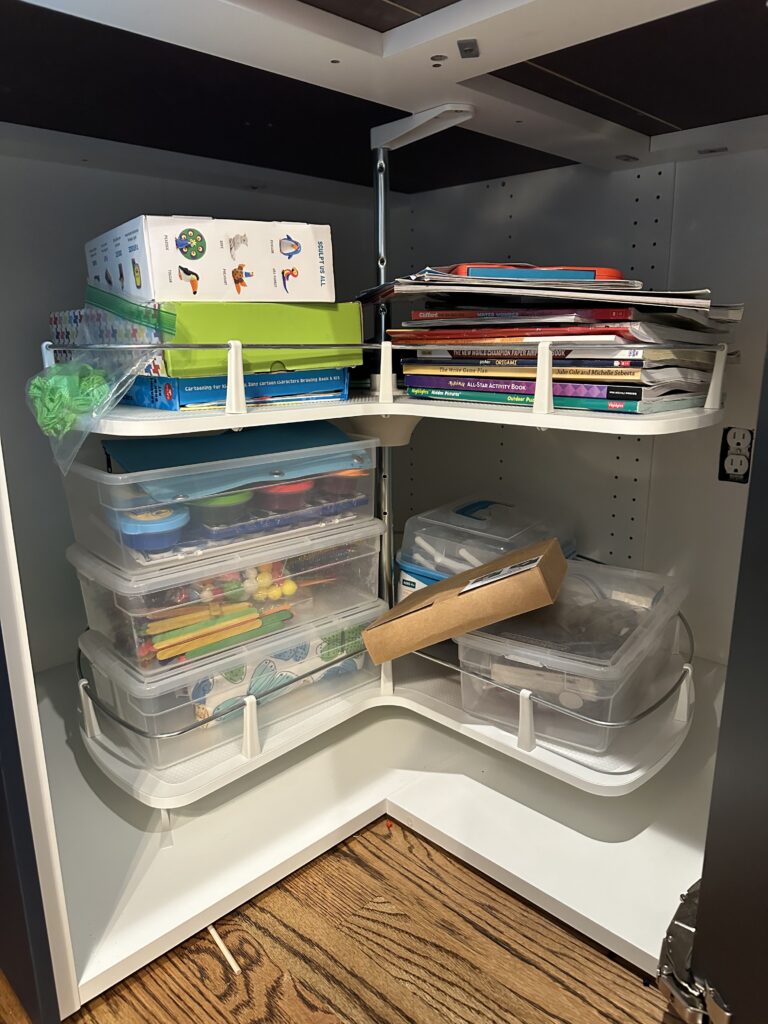
The other thing I see constantly: the playroom is treated as one room with one problem. It almost never is. In a planning meeting I will start in the playroom and by the end we are talking about the dining room, because that is where the art actually happens, and the mudroom, because that is where the keepsake bins ended up. Rooms leak into each other. A playroom project that ignores that gets undone by the two rooms next to it.
The test every playroom system has to pass
Every system I build gets checked against one question. Can the youngest kid who uses this room put something away without asking an adult where it goes?
If the answer is no, the system is wrong, no matter how good it looks. Here is what passing looks like.
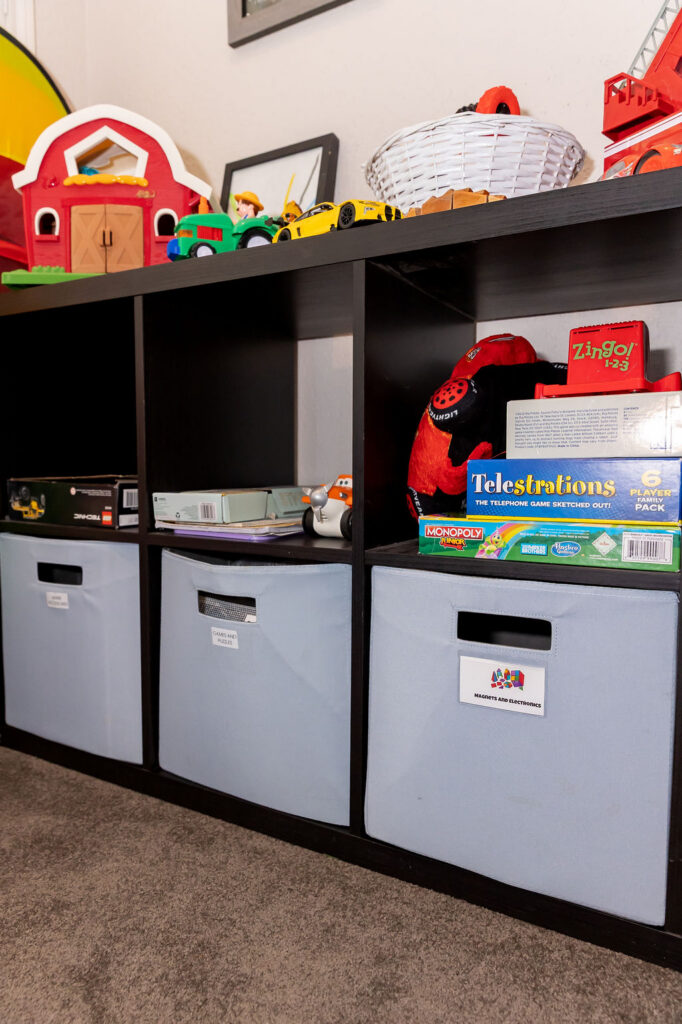
Everything they use lives below their shoulders
Not below your shoulders. Theirs. Go stand in the room and crouch to your kid’s height, and whatever you cannot see or reach from there is not really available to them. The top shelves are for your things: the puzzle with 500 pieces, the paint, the stuff that comes down when you say so.
Labels are pictures, or they are words your kid uses
A photo of the actual contents taped to the front of the bin outperforms every printed label I have ever made. For readers, use their language. “Magnet tiles” beats “Construction.” “The little animals” beats “Figurines.” You are not writing for a guest. You are writing for the person who has to use it forty times a week.
Open beats closed, and fewer beats more
Lids are a tax. Every lid is one more step between a kid and putting something away, and kids do not pay taxes, they just drop the thing on the floor. Open bins on low shelves win almost every time. And a room with eight generous categories will hold together far longer than a room with twenty-two precise ones.
Every kid in the house can run it, including the one who does not live in this room
This is the whole-family part, and it is the part most playroom organization skips. Your nine-year-old should be able to put away your four-year-old’s toys. So should a babysitter, a grandparent, and a friend who came over to play. When only one person can reset the room, the room does not get reset.
The zones that hold up
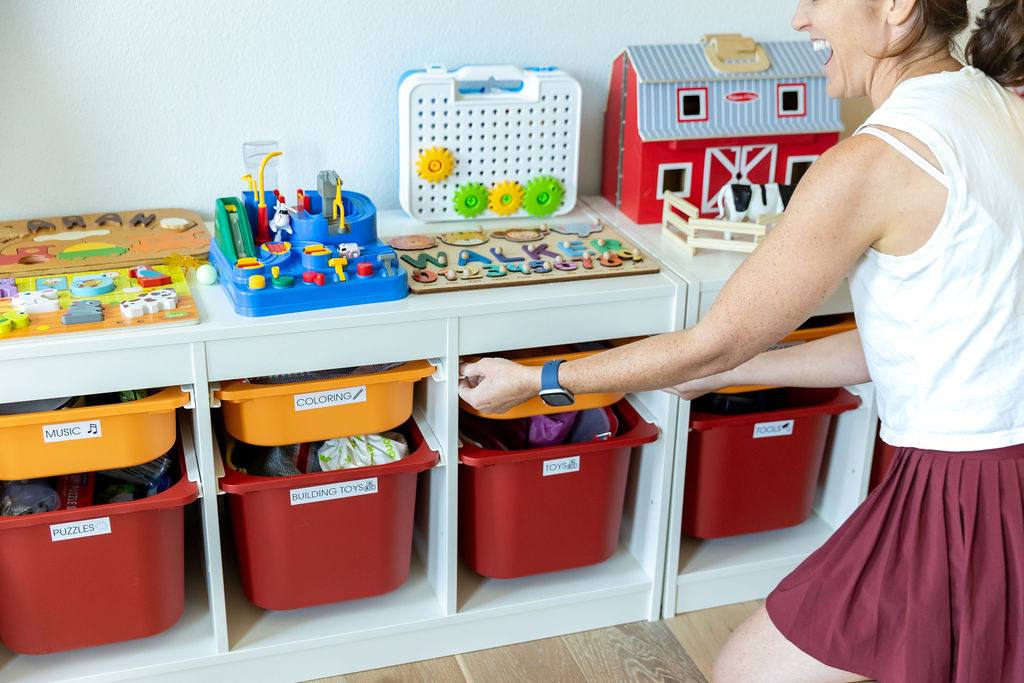
Playrooms work better when they are divided by what a kid is doing, not by what a toy is made of. Activity is how children actually think about a room. These are the zones I come back to in almost every Houston playroom organization project.
That last one matters more than it looks. A playroom without an exit fills up, because toys arrive constantly and nothing ever leaves on purpose. And to be clear about how I work: I never make anyone get rid of anything. The Out bin is a place for the decisions your family is already ready to make, not a place I put things.
The thirty-minute reset, and why it is the actual point
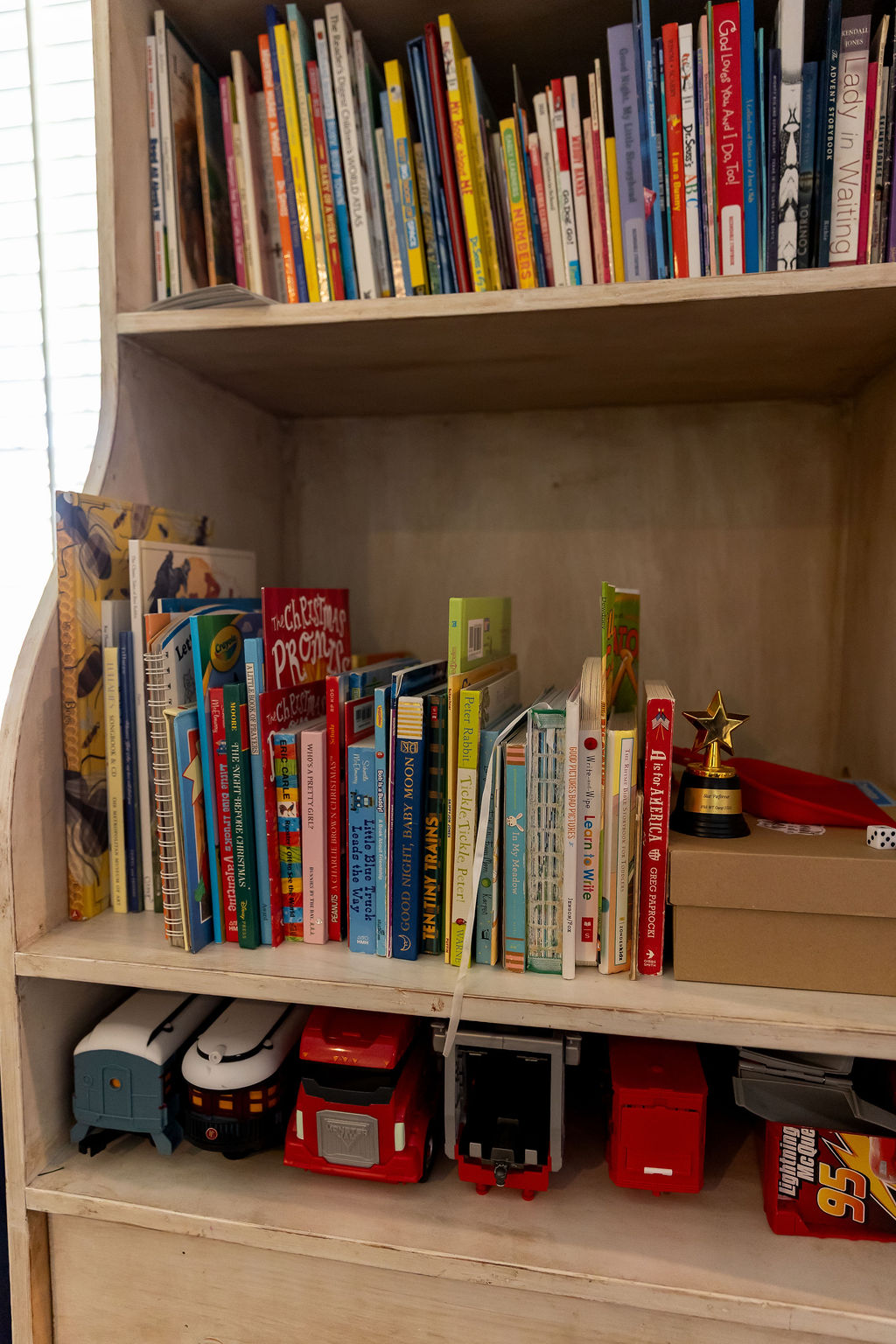
One of my clients had eight kids in her playroom over a single weekend. Not a party, just the ordinary chaos of a house where friends come over. When she told me about it, what she said was that the room was back to normal in about thirty minutes.
That is the whole return on a playroom project. Not that the room is clean. That the room comes back.
An organized playroom is not a room that stays clean. It is a room that returns to itself quickly, with the people who messed it up doing the returning.
A good playroom will still get destroyed. That is what it is for. The difference a real system makes is that destruction becomes reversible in half an hour by the kids themselves, instead of taking you two hours after they are asleep.
A few things that keep the reset short. Do it at the same moment every day, usually before dinner or before screens, so it is attached to something that already happens. Reset by zone, not by object, so “put the build bins back” is one instruction instead of forty. And expect to remind them. My own kids have checklists and I still remind them. Organization is not one-and-done, in my house either.
If a room is regularly taking longer than thirty minutes to come back, that is information. It usually means one zone is overloaded, or a category is too precise, or something is stored where you thought made sense instead of where the family actually walks.
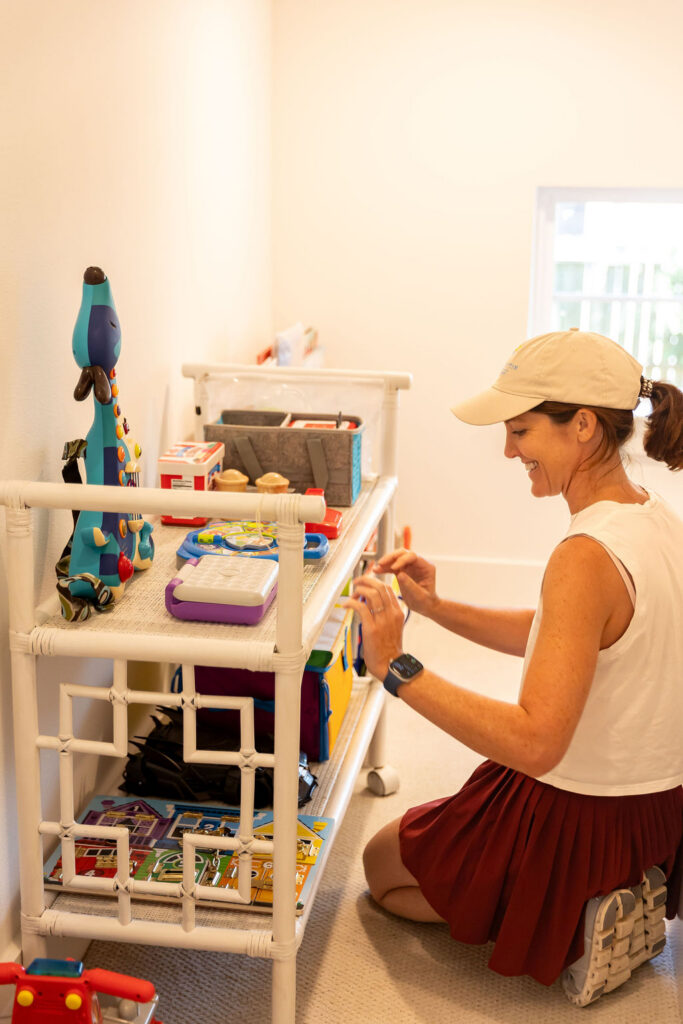
What playroom organization in Houston actually looks like
I work with families across West University, The Heights, River Oaks and Spring Branch, and a playroom is one of the most common places we start. Here is the shape of it.
That last step is the one that separates a playroom that lasts from one that does not. A system nobody was taught is a system nobody uses.
Frequently asked questions about playroom organization
How long does it take to organize a playroom?
Usually six to ten hours, most often split across two four-hour days. The amount of stuff in the room matters far more than the size of the room. A small playroom that has absorbed three kids’ worth of toys takes longer than a large one that gets edited regularly.
Do my kids need to be there?
Not for the working hours. But I want them there at the end for the handoff, because they are the ones who have to run the system. Ten minutes of walking the room with your kids is worth more than another hour of me sorting.
Will you make me throw away my kids’ toys?
No. I never make anyone get rid of anything, ever. If a toy matters to your family it gets a home. Most families do choose to let some things go once everything is visible in one place, but that is your call and it happens at your pace.
Should I clean up before you come?
Please do not. I need to see the room in its real daily state. Where things pile up tells me where the system is missing, and if you tidy it first, that information is gone.
How do I keep the playroom organized after you leave?
A short daily reset attached to something that already happens, usually before dinner or before screens, done by zone rather than by object. It should take under thirty minutes even after a big day. If it is consistently taking longer, something in the setup needs adjusting, and that is normal a few weeks in.
What areas of Houston do you serve?
I work with families throughout Houston, most often in West University, The Heights, River Oaks and Spring Branch. If you are nearby and not sure whether you are in range, ask on the call.
Ready for a playroom your kids can put back themselves?
I build playroom systems for families across West University, The Heights, River Oaks and Spring Branch, designed so the youngest kid in the house can run them. Let’s start with a free phone call.
BOOK A FREE CALLJordan Wilde is the owner of Wildely Organized, a home organization company in Houston, TX serving families in West University, The Heights, River Oaks, and Spring Branch. A former teacher and a mom of three, she specializes in whole-family systems — spaces that everyone in the house can use and maintain — not just mom.
